Pocket Musical Instruments: A Complete Guide to the Top-8 Picks
Pocket musical instruments are all about instant creativity. They’re designed to be small enough to carry anywhere, simple enough to pick up without preparation, and expressive enough to turn spare moments into music. Whether you’re a musician looking for a portable sketchpad or a beginner searching for something fun and unintimidating, pocket instruments offer a unique balance of playfulness and musical value.
Modern pocket instruments range from acoustic classics to digital sound machines. Many run on batteries, fit easily into a bag or jacket pocket, and encourage experimentation without the pressure of traditional instruments.
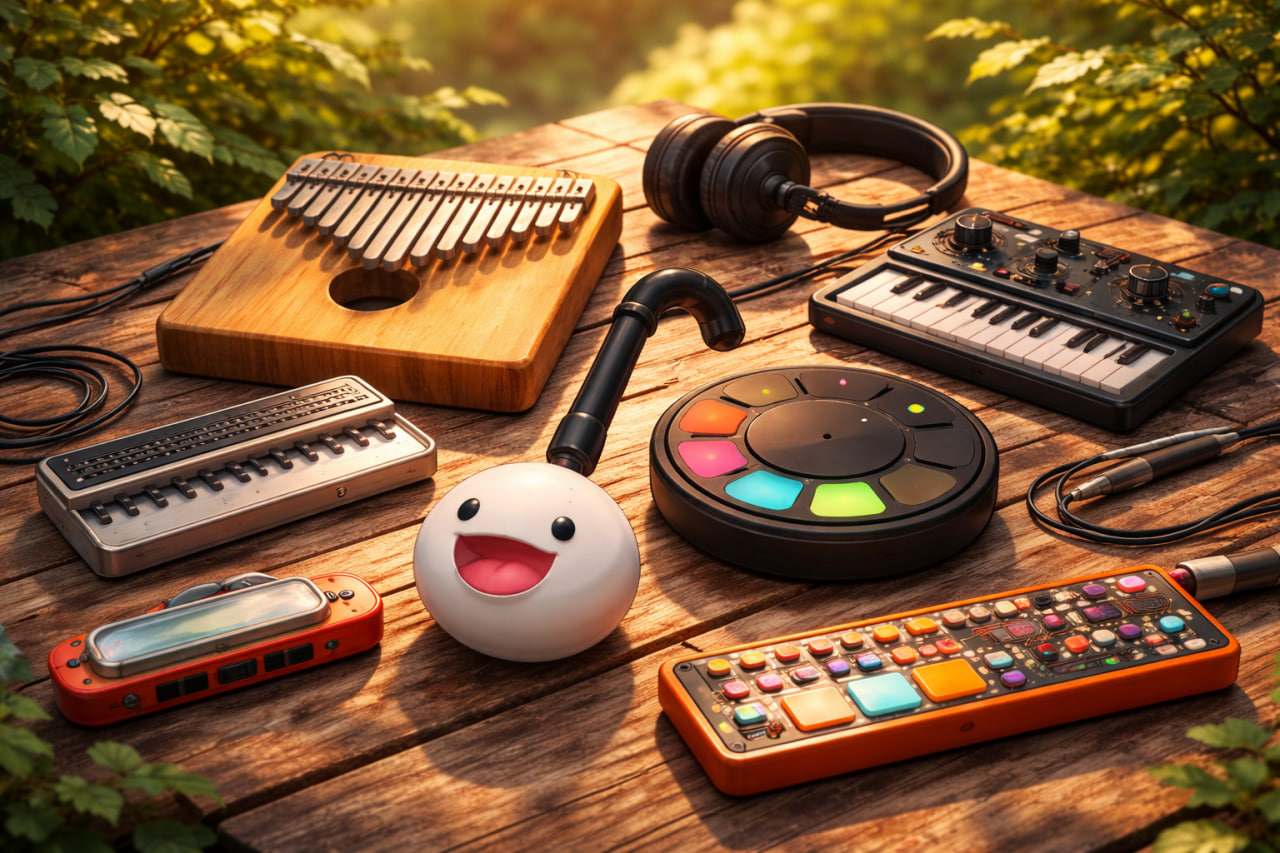
Below is a curated list of eight pocket musical instruments worth considering this year — from expressive acoustic tools to compact electronic devices, all suitable for everyday creativity.
Main Advantages of Pocket Musical Instruments
Pocket instruments focus on accessibility and spontaneity rather than technical complexity.
One key advantage is portability. These instruments are small, lightweight, and easy to carry, making them ideal for travel, outdoor use, or quick creative breaks.
Another benefit is low learning curve. Most pocket instruments are designed to sound good immediately, even without musical training. This makes them appealing to beginners and experienced musicians alike.
Finally, pocket instruments encourage creative exploration. Because they are less formal than full-sized instruments, users tend to experiment more freely — leading to unexpected ideas and musical inspiration.
Top-8 Pocket Musical Instruments — From Acoustic Charm to Digital Play
1. Kalimba (Thumb Piano)
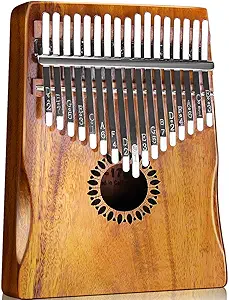
The kalimba is one of the most popular pocket instruments thanks to its warm, calming sound and intuitive design. Metal tines are plucked with the thumbs, producing bell-like tones that are naturally harmonious.
It’s easy to learn, highly portable, and requires no power. Kalimbas are excellent for relaxation, songwriting, and casual playing, making them a favorite for everyday use.
In addition to its musical qualities, the kalimba is often used as a mindfulness and stress-relief instrument. The tuning layout minimizes dissonance, so even random playing sounds pleasant. This makes it especially appealing for beginners or for moments when you want to play without thinking about technique.
Many pocket kalimbas are made from wood or acrylic and come pre-tuned, requiring little to no maintenance. Some models also include sound holes or pickups, allowing for subtle tonal variation or recording.
Pros:
- Very easy to learn
- Relaxing, melodic sound
- No batteries or setup required
Cons:
- Limited volume
- Less expressive range than larger instruments
To buy this product, click here.
2. Teenage Engineering Pocket Operator PO-33 K.O
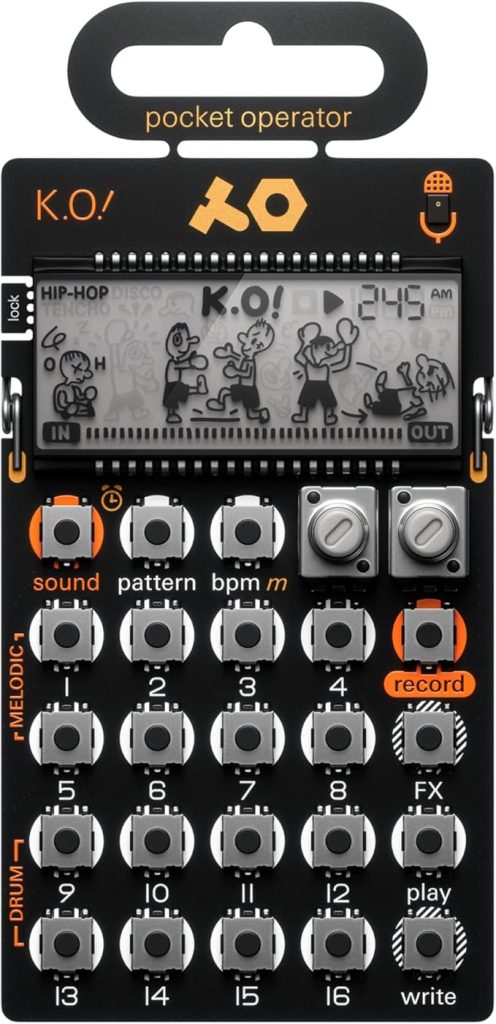
The Pocket Operator PO-33 is a mini sampler and sequencer that fits in your hand. Created by Teenage Engineering, it allows you to record sounds, create beats, and build full tracks on a tiny screen.
Despite its size, it’s a powerful creative tool, especially for electronic musicians and producers who want a portable sketchpad.
What makes the PO-33 special is how much control and depth it offers in such a small format. Users can sample via microphone or line-in, slice samples, sequence patterns, and chain them into full compositions. It’s often used to sketch ideas that later become full tracks in a DAW.
Its minimalist interface encourages experimentation and creative problem-solving. While it looks playful, the PO-33 is frequently used in serious music production, live performances, and even professional studios.
Pros:
- Powerful sampling and sequencing
- Highly portable
- Endless creative potential
Cons:
- Exposed design (no built-in case)
- Learning curve for beginners
To buy this product, click here.
3. Stylophone Gen X-2
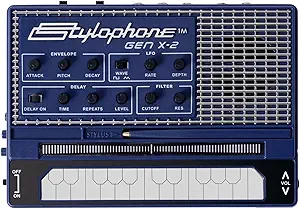
The Stylophone Gen X-2 modernizes the classic stylus-controlled synth with a retro-futuristic sound. You play it by touching notes with a pen-like stylus, creating distinctive electronic tones.
It’s playful, quirky, and instantly recognizable — perfect for experimental music and casual fun.
Beyond nostalgia, the Gen X-2 includes modern features such as filters, modulation effects, and external input options. This allows it to function not only as a standalone instrument, but also as a sound-processing tool for other audio sources.
Its lo-fi character makes it especially popular for experimental, indie, and electronic genres where imperfection and character are valued more than precision.
Pros:
- Unique playing experience
- Iconic electronic sound
- Very portable
Cons:
- Limited tonal range
- Not suited for traditional melodies
To buy this product, click here.
4. Otamatone
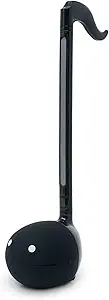
The Otamatone is a novelty instrument with real musical potential. Its sliding pitch control allows expressive bends and vibrato, while its cheerful design makes it instantly approachable.
While often seen as a toy, skilled players can produce surprisingly expressive performances.
What sets the Otamatone apart is its continuous pitch control, similar to a fretless instrument or theremin-like expression. This makes it ideal for glissandos, vocal-like phrasing, and playful sound effects.
It’s frequently used in educational settings, viral performances, and experimental music contexts. While accuracy takes practice, its expressiveness rewards patience and creativity.
Pros:
- Expressive pitch control
- Fun, engaging design
- Great conversation starter
Cons:
- Requires practice for accuracy
- Sound may not suit all styles
To buy this product, click here.
5. Hohner Mini Harmonica
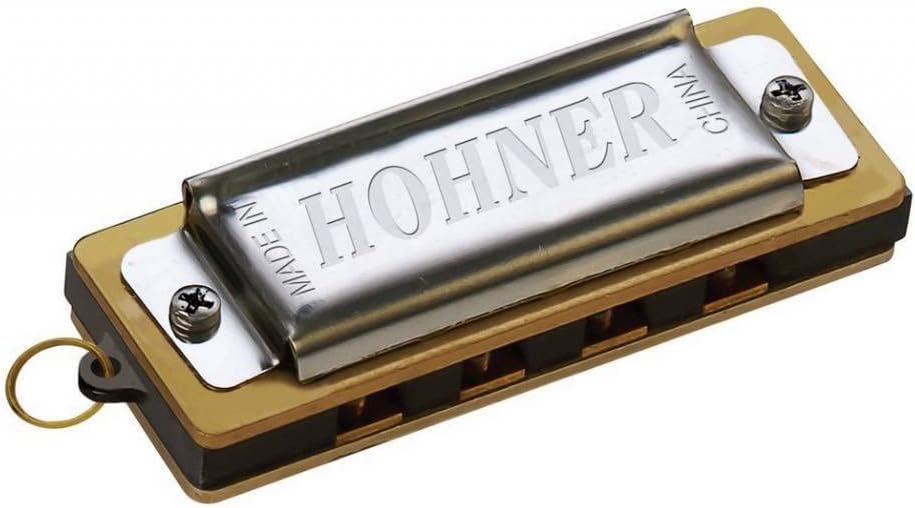
The mini harmonica delivers authentic acoustic sound in an ultra-compact form. Produced by Hohner, it’s tuned like a standard harmonica but small enough to fit on a keychain.
It’s ideal for blues, folk, and casual melodic playing on the go.
Despite its size, the mini harmonica uses traditional reed construction, giving it the same tonal character as larger models. This makes it a genuine instrument rather than a novelty.
It’s best suited for short musical phrases, warm-ups, or spontaneous jams, and is often carried as a musical companion rather than a main instrument.
Pros:
- True acoustic sound
- Extremely portable
- Durable metal construction
Cons:
- Very small size takes getting used to
- Limited comfort for long sessions
To buy this product, click here.
6. Korg Monotron Delay
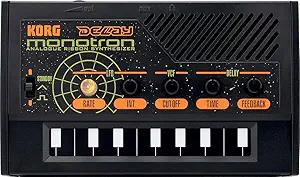
The Monotron Delay is a compact analog synthesizer with a built-in delay effect. Made by Korg, it’s designed for sound experimentation rather than traditional melodies.
It excels at drones, effects, and textures, making it a favorite among electronic and ambient musicians.
The analog filter is one of its strongest features, allowing smooth sweeps and aggressive resonance. Combined with delay, it becomes a powerful tool for creating evolving soundscapes and effects.
Many musicians use the Monotron Delay as a sound design module, integrating it into larger setups via its auxiliary input.
Pros:
- True analog sound
- Built-in delay effect
- Highly experimental
Cons:
- Not melody-focused
- Speaker is small
To buy this product, click here.
7. Pocket Sax
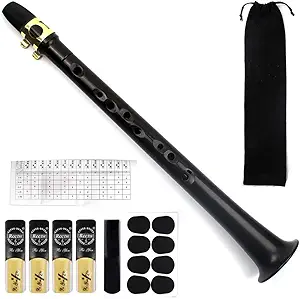
The Pocket Sax is a compact wind instrument that combines the fingering logic of a saxophone with a much smaller, travel-friendly body. Despite its size, it produces a surprisingly rich and expressive tone through a simple reed-based mouthpiece.
It’s especially appealing to saxophonists who want a portable practice instrument, but it’s also accessible to beginners thanks to its simplified design.
What makes the Pocket Sax stand out is its balance between seriousness and portability. Unlike novelty wind instruments, it allows for breath control, articulation, and phrasing similar to full-sized saxophones. This makes it useful not only for casual play, but also for technique maintenance while traveling.
Many models are made from durable plastic or lightweight metal and can be played quietly, making them suitable for indoor practice. Its compact size encourages spontaneous playing without sacrificing musical expressiveness.
Pros:
- Expressive wind-based sound
- Very portable alternative to a full saxophone
- Useful for practice and casual performance
Cons:
- Sound projection is limited
- Requires basic breath control technique
To buy this product, click here.
8. Donner Pocket Drum
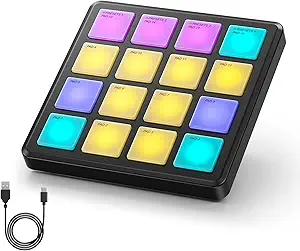
The Donner Pocket Drum is a handheld electronic rhythm tool with built-in sounds and patterns. It’s designed for practicing rhythm, beat-making, and casual percussion anywhere.
While simple, it’s a fun way to stay rhythmically engaged without a full drum setup.
It’s especially useful for drummers who want to practice timing on the go, or for beginners developing a sense of rhythm. Headphone support makes it suitable for quiet environments.
Although limited in sound variety, its simplicity makes it approachable and easy to integrate into daily routines.
Pros:
- Portable rhythm practice
- Built-in speaker and headphones support
- Simple and intuitive
Cons:
- Limited sound variety
- Not velocity-sensitive
To buy this product, click here.
How to Choose the Right Pocket Musical Instrument
Start with your goal. If relaxation is the priority, acoustic instruments like kalimbas or harmonicas are ideal. For beat-making and sound design, digital devices offer more flexibility.
Consider learning curve and play style. Some instruments are instant and intuitive, while others reward experimentation over time.
Finally, think about where and how you’ll use it. Battery life, volume, and durability all matter for everyday carry instruments.
Frequently Asked Questions
What makes an instrument “pocket-sized”?
Compact dimensions, light weight, and the ability to be carried easily without a case.
Are pocket instruments suitable for beginners?
Yes. Many are specifically designed to sound good with minimal technique.
Can pocket instruments be used for serious music?
Absolutely. Many musicians use them for songwriting, sound design, and live performance elements.
Conclusion
Pocket musical instruments are about making music more immediate and approachable. They remove barriers, invite experimentation, and fit naturally into daily life. Whether you choose an acoustic classic or a digital sound machine, the best pocket instrument is the one that makes you want to play — anytime, anywhere.