Musical Instruments for Children: A Complete Guide to the Top-8 Picks for Learning and Development
Musical instruments play a powerful role in a child’s development. They help improve coordination, concentration, creativity, and emotional expression while making learning fun and engaging. From simple rhythm tools for toddlers to beginner keyboards and string instruments for older kids, the right musical instrument can spark a lifelong love for music.
Modern children’s instruments are designed to be safe, durable, and age-appropriate, combining educational value with playful design. Whether you’re choosing a first instrument or encouraging a growing interest in music, there’s an option to suit every age and personality.
Why Musical Instruments Are Important for Child Development
Music supports both cognitive and emotional growth. Playing an instrument helps children develop fine motor skills, memory, listening ability, and discipline. It also boosts confidence, as kids see progress through practice and performance.
Group music activities encourage social skills and teamwork, while solo play helps children focus and express emotions creatively. Most importantly, learning music teaches patience and persistence in a positive, enjoyable way.
Top-8 Musical Instruments for Children — From First Sounds to Creative Exploration
1. Kids Keyboard Piano
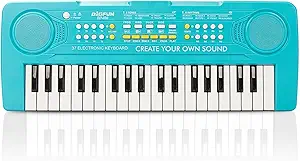
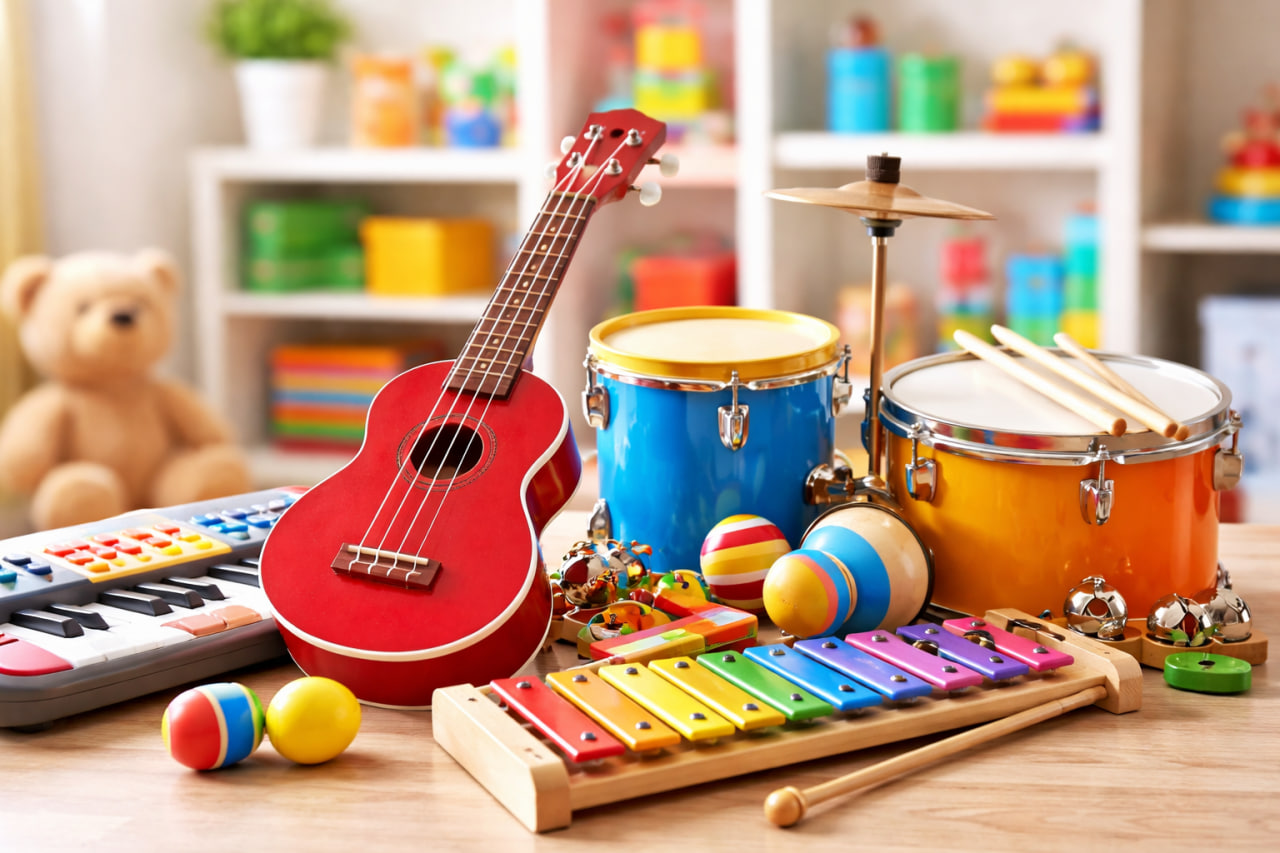
A beginner keyboard is one of the most versatile instruments for children. It introduces melody, rhythm, and harmony while allowing kids to experiment freely with sounds. Many models include built-in songs, learning modes, and fun sound effects.
In addition to basic note learning, kids’ keyboards often feature multiple instrument voices, rhythm patterns, and demo tracks that help children understand how music is structured. Some models include light-up keys or guided learning modes, making it easier for beginners to follow along and play simple melodies.
Keyboards are also excellent for developing two-hand coordination and early music theory skills. As children grow, they can transition from playful experimentation to structured practice without needing to change instruments immediately.
Pros:
- Easy to learn and play
- Encourages creativity and musical exploration
- Suitable for a wide age range
Cons:
- Requires space and batteries or power
- Cheaper models may have limited sound quality
Ideal for children who enjoy experimenting with melodies and want a foundation for future piano learning.
To buy this product, click here.
2. Xylophone / Glockenspiel
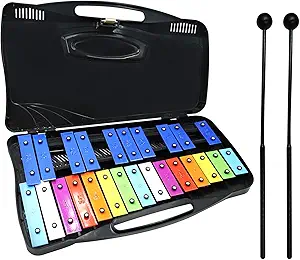
Xylophones are perfect for young children just starting with music. The colorful bars make learning notes intuitive, while striking them helps develop hand-eye coordination and rhythm.
These instruments provide immediate auditory feedback, which is important for early learning. Children quickly understand the relationship between movement and sound, helping them build a sense of cause and effect. Many xylophones are color-coded to simplify note recognition and encourage independent play.
Because of their durability and simplicity, xylophones are often used in early education settings. They are ideal for introducing basic musical concepts without overwhelming young learners.
Pros:
- Simple and intuitive
- Great for early rhythm and pitch recognition
- Durable and safe for toddlers
Cons:
- Limited musical range
- May lose appeal as children grow older
Best suited for toddlers and preschoolers discovering sound for the first time.
To buy this product, click here.
3. Ukulele
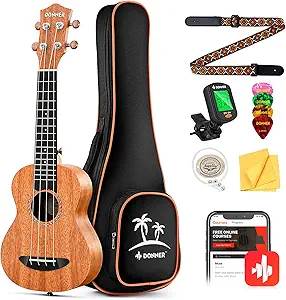
The ukulele is a child-friendly string instrument thanks to its small size and soft nylon strings. It’s easier on the fingers than a guitar and allows kids to learn basic chords quickly.
Playing the ukulele helps children develop finger strength, timing, and listening skills. Because chords are relatively simple, kids can start playing recognizable songs early, which boosts motivation and confidence.
The ukulele also encourages singing along, helping children develop pitch awareness and musical expression. It’s an excellent stepping stone toward learning guitar or other string instruments later on.
Pros:
- Lightweight and easy to handle
- Encourages singing and rhythm
- Builds confidence through fast progress
Cons:
- Requires tuning and guidance
- Not ideal for very young children
A great choice for kids interested in singing and learning simple songs.
To buy this product, click here.
4. Recorder (Flute)
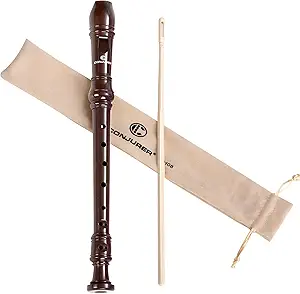
The recorder is a classic beginner instrument often used in schools. It helps children learn breath control, note reading, and basic musical structure.
Learning the recorder teaches children how airflow affects sound, which builds awareness of dynamics and tone. It also introduces proper posture and finger placement, both essential for future wind instruments.
Although it can sound challenging at first, regular practice helps children develop discipline and patience. The recorder is also an affordable way to introduce formal music education at home or in school.
Pros:
- Affordable and widely available
- Helps develop listening and breath control
- Easy to carry and store
Cons:
- Sound can be unpleasant without practice
- Requires patience to master
Best for school-age children starting formal music education.
To buy this product, click here.
5. Kids Drum Set or Percussion Kit
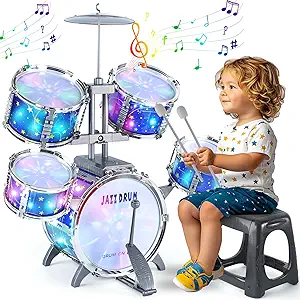
Drums and percussion instruments are perfect for energetic children. They help develop rhythm, timing, and coordination while allowing kids to release energy in a creative way.
Percussion instruments improve both gross and fine motor skills and help children internalize rhythm patterns. Playing drums also supports emotional expression and stress release, making them especially beneficial for active or expressive kids.
Many kids’ drum sets are designed with volume control or softer materials to make them more home-friendly, while still offering an authentic playing experience.
Pros:
- Improves rhythm and motor skills
- Fun and engaging for active kids
- Encourages group play
Cons:
- Can be noisy
- Requires space
Ideal for children who love movement and expressive play.
To buy this product, click here.
6. Musical Toy Set (Multi-Instrument)
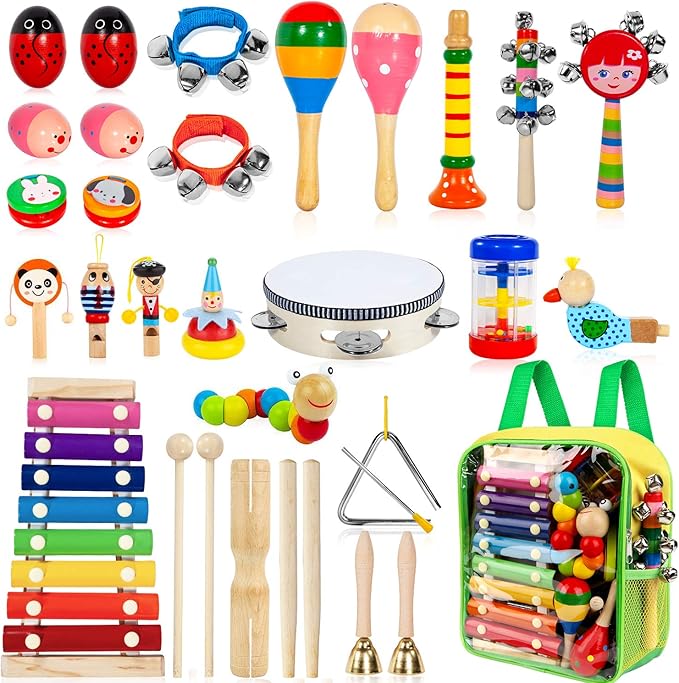
These sets usually include several small instruments such as tambourines, maracas, bells, and castanets. They allow kids to explore different sounds and textures.
Multi-instrument sets encourage experimentation and sensory development. Children can compare sounds, discover rhythms, and create simple musical patterns on their own or with others.
These sets are especially useful for group activities, family play, or early childhood education, where exploration and fun are more important than technical skill.
Pros:
- Encourages exploration and creativity
- Safe and age-appropriate
- Great for group or family play
Cons:
- Not focused on one instrument
- Limited long-term progression
Perfect for toddlers and early learners discovering music through play.
To buy this product, click here.
7. Beginner Violin (Child Size)
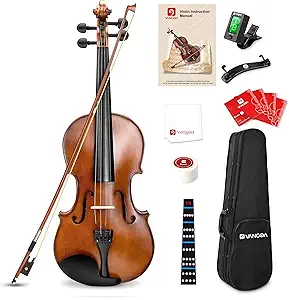
A child-sized violin introduces discipline and listening skills at an early age. With guidance, it can help children develop strong musical foundations.
Learning the violin improves posture, coordination, and fine motor control. It also strengthens listening skills, as children must carefully match pitch and tone.
Because the violin requires regular practice, it helps children build responsibility and perseverance. It is best suited for families willing to support structured learning and lessons.
Pros:
- Builds focus and patience
- Develops ear training
- Suitable for structured learning
Cons:
- Requires regular practice
- Needs adult supervision and lessons
Best for motivated children and families ready for guided music learning.
To buy this product, click here.
8. Electronic Music Pad / Beat Maker
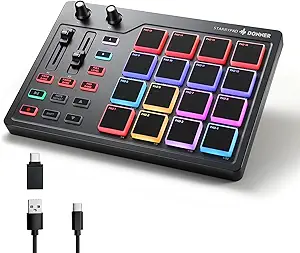
Electronic music pads allow kids to create beats, loops, and sound effects. They are especially appealing to children interested in modern music and technology.
These devices introduce basic concepts of rhythm, layering, and composition in an interactive way. Kids can experiment freely without worrying about traditional technique, which encourages creativity and confidence.
Many models include headphone support, making them suitable for shared living spaces. They can also spark interest in music production and digital creativity.
Pros:
- Encourages creativity and experimentation
- Modern, engaging interface
- Quiet headphone options available
Cons:
- Less focus on traditional music theory
- Screen-based interaction
Great for older children who enjoy digital creativity and rhythm-based music.
To buy this product, click here.
How to Choose the Right Musical Instrument for Your Child
Start with your child’s age and interests. Younger children benefit from simple, hands-on instruments, while older kids may enjoy structured learning or creative freedom.
Consider noise level and space, especially if you live in an apartment. Some instruments offer volume control or headphone options, which can be helpful.
Durability and safety are essential. Choose instruments made from child-safe materials with smooth edges and solid construction.
Most importantly, focus on enjoyment. The best instrument is the one your child wants to play regularly and feels excited to explore.
Frequently Asked Questions
What is the best first musical instrument for a child?
Xylophones, keyboards, and percussion instruments are excellent first choices due to their simplicity and immediate feedback.
At what age can children start learning music?
Many children can begin exploring music as early as 1–2 years old through simple instruments and rhythmic play.
Do children need music lessons?
Lessons are helpful but not required at first. Free play builds interest, while lessons add structure as skills grow.
Conclusion
Musical instruments are more than toys — they are tools for learning, creativity, and emotional growth. Whether your child enjoys rhythm, melody, or digital sound creation, the right instrument can inspire confidence and curiosity.
By choosing an age-appropriate, engaging instrument, you give your child the opportunity to develop skills that last a lifetime — all while having fun making music.