Beginner Drums: A Complete Guide to the Top-8 Sets for New Players
Drum sets are the backbone of modern rhythm sections—whether you’re learning your first groove, playing in a band, or practicing at home. A good beginner kit gives you solid feel, musical flexibility, and a setup that inspires regular playing without overwhelming complexity.
Today’s entry-level drum sets are more playable, better built, and more performance-ready than ever. The right kit can make learning easier, improve coordination, and keep your motivation high.
Whether you’re starting lessons, jamming with friends, or building a home practice space, choosing the right beginner drum set can make all the difference.
Helping New Players Get Started: Useful Tips
Starting drums is exciting—but the right early decisions make learning smoother and more enjoyable. Here’s a deeper look at the most important beginner considerations.
Choose the Right Configuration
Most beginners benefit from a standard 5-piece kit (bass drum, snare, two rack toms, floor tom). This setup:
- Teaches coordination across multiple surfaces
- Covers most music styles (rock, pop, funk, worship, etc.)
- Builds habits that translate to full band settings
Smaller kits (3- or 4-piece) work well for tight spaces or younger players, but the 5-piece offers the most flexibility as skills develop.
Consider Acoustic vs. Electronic
Your environment plays a major role.
Acoustic drums:
- Provide natural stick rebound and dynamic response
- Develop proper technique and touch
- Deliver authentic tone and projection
Electronic drums:
- Allow headphone practice
- Offer volume control for apartments
- Include built-in sounds and coaching tools
If noise is a concern, electronic kits make consistent practice much easier.
Plan for Growth
A beginner kit should last beyond the first few months. Look for:
- Stable, adjustable hardware
- Upgrade-friendly cymbals
- Standard shell sizes for easy expansion
Many players upgrade drumheads and cymbals first. Choosing a solid base kit ensures those upgrades make a real difference.
Set Realistic Expectations
Entry-level kits won’t sound like high-end studio drums—and that’s okay. Focus on:
- Solid tuning
- Comfortable setup height
- Consistent practice
Technique matters far more than gear at this stage. A reliable, stable kit supports progress better than an overly complex setup.
Think About Setup and Comfort
Proper ergonomics prevent bad habits:
- Snare at a natural arm angle
- Toms within easy reach
- Bass pedal aligned with your foot
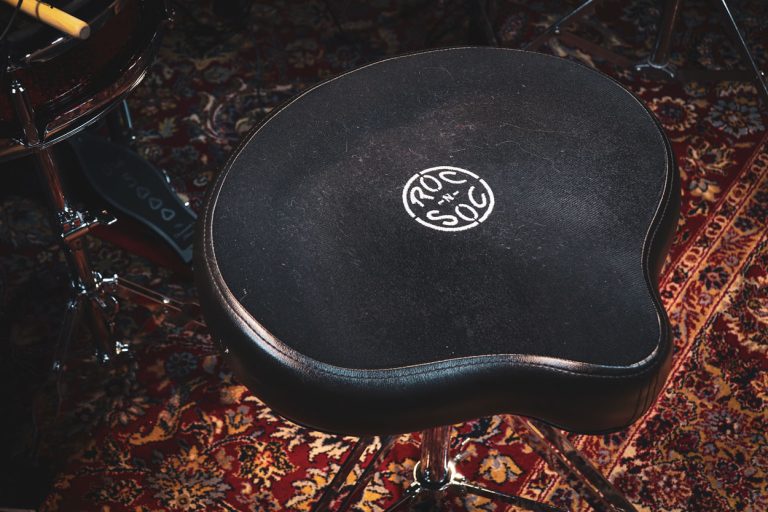
- Throne height supporting good posture
Comfort directly affects endurance and long-term improvement.
Main Advantages of Beginner Drum Sets
Better Playability
Beginner drum sets are designed to be approachable. Shell sizes are standard, hardware is adjustable, and layouts are simple—making it easier to learn coordination and timing without fighting the instrument. Stable stands and responsive drumheads help new players focus on groove and technique instead of constant adjustments.
Practice-Friendly Design
Many entry-level kits are built with home use in mind. Electronic kits offer headphone practice and volume control, while acoustic kits often include lighter shells that are easier to manage in small spaces. The goal is consistent practice—and beginner kits remove barriers that might otherwise discourage regular playing.
All-in-One Value
Most beginner drum sets come as complete packages: drums, hardware, pedals, and sometimes cymbals. This reduces confusion for new players and eliminates the need for multiple purchases. Everything is included so you can assemble the kit and start playing immediately.
Upgrade Potential
Good beginner kits allow gradual improvements. Upgrading drumheads, cymbals, or pedals can noticeably improve tone and feel without replacing the entire set. This makes entry kits practical long-term investments rather than short-term solutions.
The Top-8 Sets for New Players
1. Tama Imperialstar
Pros:
- Complete 5-piece kit with durable hardware
- Strong, punchy tone for rock and pop
- Excellent reputation for build quality
Cons:
- Slightly heavier hardware than some entry kits
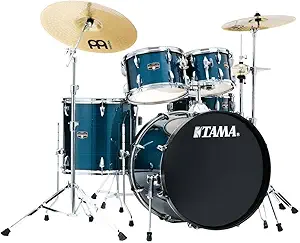
The Tama Imperialstar is one of the most respected beginner-to-intermediate drum sets on the market. Designed as a full 5-piece configuration with cymbals and hardware included, it offers a professional feel.
More Detail:
- Shell Material: 100% poplar shells — warm tone with solid low-end punch.
- Hardware: Double-braced stands and sturdy bass pedal for added stability.
- Cymbals: Often includes Meinl HCS brass cymbals in complete packages.
- Why It Stands Out: Tama’s hardware durability is a major advantage for beginners who want a kit that can handle frequent setup and transport.
To buy this product, click here.
2. Pearl Roadshow
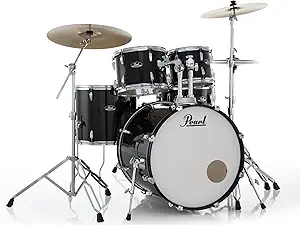
Pros:
- Complete package with stands and throne
- Consistent build quality
- Popular choice in schools
Cons:
- Cymbals are basic and may need later upgrade
The Pearl Roadshow gives you a full 5-piece drum set plus cymbals and hardware right out of the box. Its balanced shell sizes and reliable hardware make it a practical choice for total beginners and students.
More Detail:
- Shell Material: Poplar, 7-ply — offering decent sustain and projection.
- Included Cymbals: 16″ crash and 14″ hi-hat — good for learning rhythm accents.
- Hardware: Stands, snare stand, bass pedal, throne included — no extra purchases required.
- Bonus: Roadshow often has gig bag accessories available separately, ideal for storage and transport.
To buy this product, click here.
3. Yamaha Rydeen
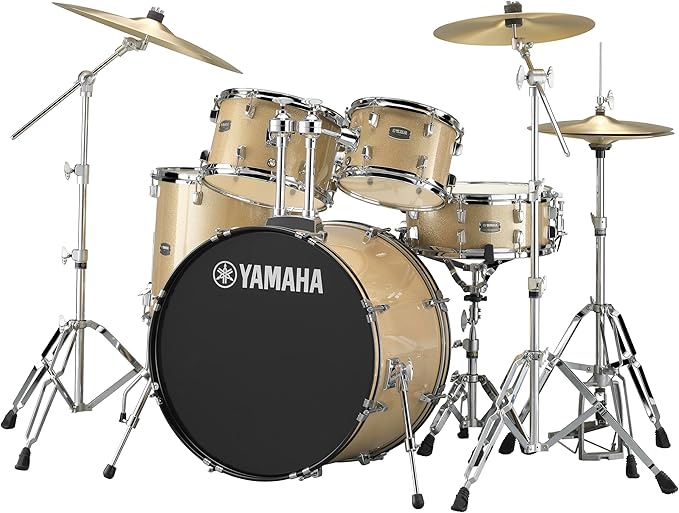
Pros:
- Yamaha’s reputation for durable hardware
- Warm, balanced sound
- Great for long-term play
Cons:
- Slightly higher entry price than others
The Yamaha Rydeen is a step up in quality and consistency. While still beginner-oriented, its build quality and tone make it suitable for intermediate players too. The kit’s strong hardware and refined shells set it apart.
More Detail:
- Shell Material: Poplar/Walnut blend — warmer tone with good resonance.
- Hardware: Decent weight stands with smooth height adjustments.
- Sound Character: Balanced lows and articulate toms — translates well in band settings.
- Durability: Yamaha’s hardware threading and construction stands up well to frequent tuning and transport.
To buy this product, click here.
4. Gretsch Catalina Maple
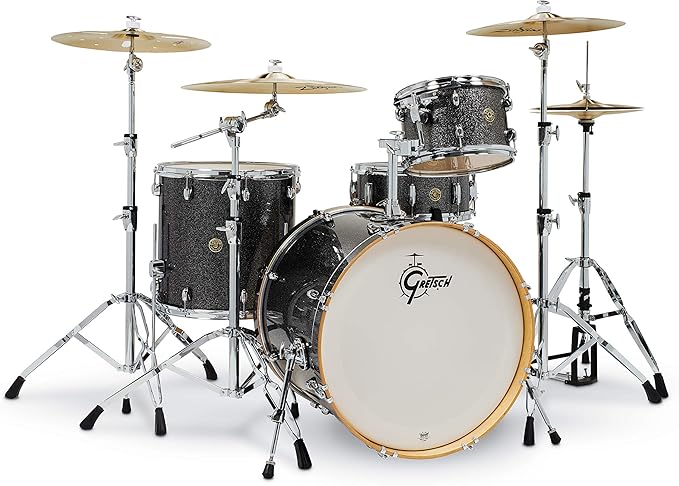
Pros:
- Full starter package with hardware and cymbals
- Warm, balanced Gretsch-style tone
- Easy to tune and maintain
Cons:
- Cymbals are entry-level quality
The Gretsch Energy is a reliable 5-piece beginner kit that brings Gretsch’s recognizable sound character into an affordable setup. It’s designed for new players who want a versatile kit suitable for lessons, rehearsals, and small performances.
More Detail:
- Shell Material: Poplar — smooth, controlled resonance with balanced mids.
- Configuration: 22″ bass drum, 10″/12″ rack toms, 16″ floor tom, 14″ snare.
- Included Hardware: Stands, bass pedal, throne, and basic cymbals.
- Why It’s a Good Choice: The kit is straightforward to assemble and tune, making it beginner-friendly while still sounding full in a band setting.
To buy this product, click here.
5. PDP by DW Mainstage
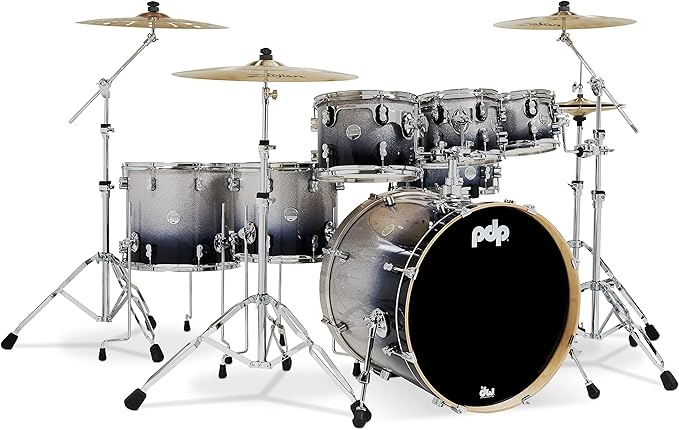
Pros:
- Good hardware quality for entry price
- Balanced sound and feel
- Trusted name in drums
Cons:
- Limited expansion options
PDP Mainstage brings the pedigree of DW quality into a beginner-friendly set. Hardware stands are sturdy, tuning is consistent, and the kit responds well both in practice and small-group playing contexts.
More Detail:
- Shell Material: Poplar — even response across registers.
- Included Components: Solid snare, durable bass pedal, dual-braced stands.
- Why It’s Good: PDP’s connection to DW means hardware tolerances and stand reliability are often above typical beginner kits.
- Sound Character: Balanced tone well-suited for rock, pop, and basic groove playing.
To buy this product, click here.
6. Alesis Nitro Max Kit
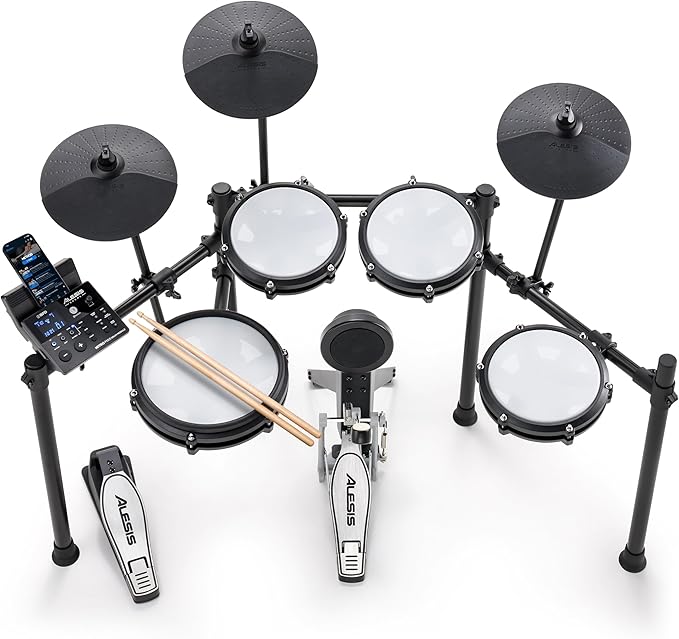
Pros:
- Quiet practice with mesh heads
- Volume control and headphone use
- Built-in drum sounds and coaching features
Cons:
- Requires space and amplifier/headphones
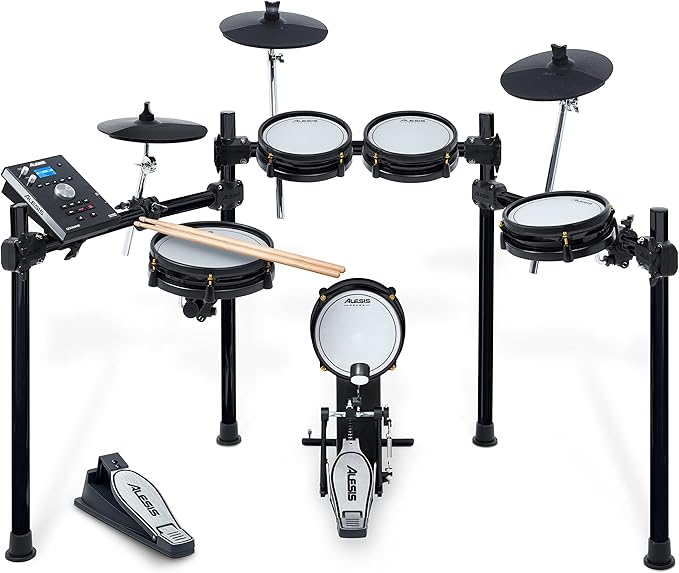
The Alesis Nitro Max Kit is a great first electronic drum set with mesh heads for realistic rebound. Its sound module includes a range of kits and practice tools — making it ideal for home practice where volume control matters.
More Detail:
- Pads: Mesh heads on snare and toms for closer acoustic feel.
- Connectivity: USB/MIDI available for DAW recording and learning apps.
- Practice Tools: Built-in metronome and coaching functions help skill development.
To buy this product, click here.
7. Roland TD-02KV
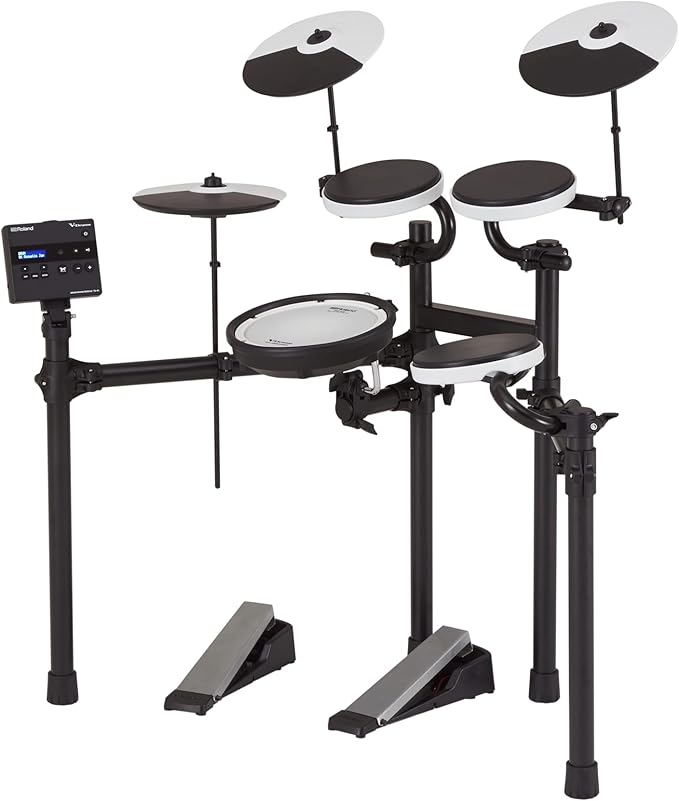
Pros:
- Excellent playability and feel
- Compact footprint
- Great for beginners and apartments
Cons:
- Higher class than basic electronic kits
The Roland TD-02KV brings Roland’s trusted build and expressive dynamics to the beginner level. It’s quiet, responsive, and packed with useful coaching features — perfect if you want electronic convenience without losing feel.
More Detail:
- Mesh Pads (Optional Upgrade): A number of retailers offer mesh upgrades to increase realism.
- Sounds: Quality Roland tones across acoustic and electronic drum types with natural dynamics.
- Practice Features: Built-in rhythm coach modes help you track progress.
- Compact Design: Small footprint makes it suitable for apartments and bedrooms.
To buy this product, click here.
8. Carlsbro CSD-100
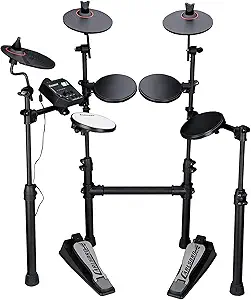
Pros:
- Solid-sounding entry acoustic kit
- Straightforward setup
- Value-oriented choice
Cons:
- Basic cymbals and hardware
The Carlsbro CSD-100 is a practical starter set that covers all the essentials. Its balanced tuning and simple configuration help new players focus on playing, not tweaking.
More Detail:
- Shell Material: Poplar — smooth tone with good midrange presence.
- Hardware Set: Includes basic stands and snare stand — functional for early players.
- Cymbals: Standard hi-hat and crash — sufficient for rhythm learning.
- Why Players Like It: Simple, effective, and easy to adjust when first learning.
To buy this product, click here.
How to Choose the Right Beginner Drum Set
Start with your space.
If you practice at home and volume is a concern, an electronic kit (like the Alesis or Roland) gives adjustable levels and headphone practice.
Decide between acoustic feel and electronic convenience.
Acoustic sets give real stick feel and projection; electronic kits offer quiet practice, built-in sounds, and often metronome/coaching tools.
Assess upgrade potential.
Look for hardware and shells that let you upgrade cymbals and add pads later — a small investment early can extend the life of your kit.
Frequently Asked Questions
Are beginner drum sets worth it for casual players?
Yes. Beginner kits are designed to be affordable yet functional. If you’re learning for fun, practicing at home, or playing occasionally with friends, an entry-level set provides everything needed to develop skills without overspending.
Acoustic or electronic for beginners?
It depends on your environment and goals.
- Choose acoustic if you want authentic feel, natural rebound, and traditional tone.
- Choose electronic if noise control, built-in sounds, or practice tools are important.
Both options can build strong fundamentals when used consistently.
Do I need a full 5-piece set?
Not necessarily—but it’s the most versatile starting point. A 5-piece kit allows you to learn fills, coordination patterns, and full-song arrangements comfortably. Smaller kits are perfectly fine for limited spaces or younger players, but they offer fewer tonal options.
Will I outgrow a beginner drum set quickly?
Most players won’t outgrow the shells immediately. What typically gets upgraded first are cymbals, drumheads, and pedals. A well-built beginner kit can remain useful for years with small improvements along the way.
Conclusion
Choosing a beginner drum set isn’t about chasing the biggest kit or the most features—it’s about finding an instrument that supports consistent practice, comfortable playing, and steady progress. A well-chosen starter set provides the right balance of playability, durability, and value, giving new drummers the confidence to develop solid fundamentals.
Whether you prefer the natural feel of an acoustic kit or the flexibility and quiet convenience of an electronic setup, the best option is the one that fits your space, budget, and musical goals. With the right foundation in place, practice becomes more enjoyable—and improvement comes faster.
Start with a reliable kit, focus on technique, and let your skills grow from there.